
Do States Require Boat Insurance?
Direct answer: most states do not require a boat-insurance policy just to register or operate an ordinary recreational boat. The key is to separate three questions: whether state law requires coverage, whether a marina or lender contract requires proof, and whether you want coverage for your own risk.
State-law examples to verify first
| State example | Public rule to verify | Practical takeaway |
|---|---|---|
| Arkansas | Arkansas requires liability insurance for personal watercraft and motorboats with engines over 50 horsepower, with at least $50,000 of liability coverage per occurrence. | Carry proof while operating and confirm the current Arkansas rule before launch. |
| Utah | Utah requires liability insurance for personal watercraft and many motorboats, with exemptions such as motorboats under 50 horsepower and airboats. Utah lists minimum limits of $25,000/$50,000 for bodily injury or death and $15,000 for property damage, or $65,000 combined per accident. | Keep proof on board and check the current Utah Outdoor Recreation page before operating. |
| Other states and territories | Rules can turn on horsepower, personal watercraft status, rental or commercial use, local access, or state-specific exemptions. | Do not assume a short article is a complete 50-state insurance-law table. Open the current state agency or code page before relying on the answer. |
Situations where insurance is required by contract
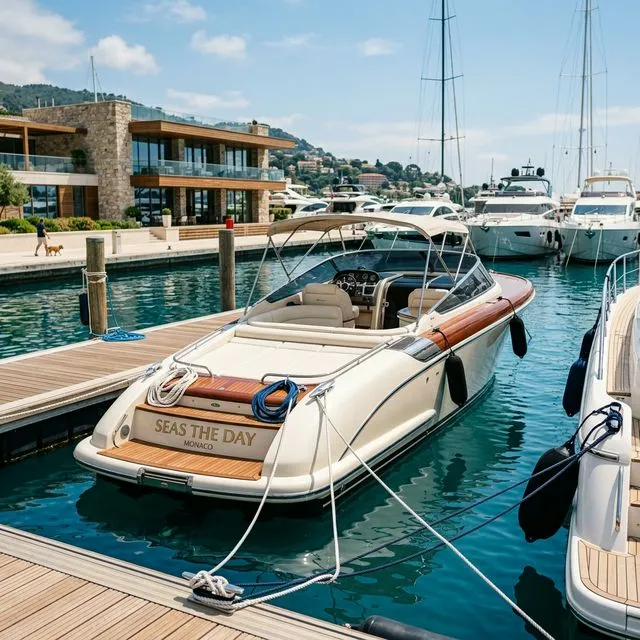
- Marina berthing — slip agreements commonly require proof of liability insurance and may name the marina as an additional insured.
- Financing — lenders usually require physical-damage coverage until the loan is paid off.
- Storage yards and clubs — dry-stack, winter storage, and yacht-club rules may include insurance minimums.
- USCG documented vessels — lenders recording a Preferred Ship Mortgage typically require coverage that protects the collateral.
- Commercial or charter use — carrying passengers, renting, guiding, or teaching may require a commercial marine policy, not a standard recreational policy.
Types of Boat Insurance Coverage
Liability coverage
Liability coverage pays for damage or injury you cause to others. It is the core protection most marinas and lenders look for:
- Bodily injury liability — medical costs and legal expenses if you injure someone
- Property damage liability — repairs to other boats, docks, lifts, seawalls, or property you damage
- Legal defense — attorney and claim-handling costs, subject to policy terms
Many owners choose limits far above statutory minimums because a serious injury or dock damage claim can exceed basic state requirements quickly. Ask the insurer how the boat policy coordinates with any personal umbrella policy.
Physical damage coverage
- Agreed value — pays the agreed insured amount if the boat is totaled, subject to policy terms
- Actual cash value — pays depreciated value at the time of loss
- Replacement cost for partial losses — may cover newer parts without depreciation, depending on the policy
Additional coverage options
- Uninsured/underinsured boater — protects you if another operator lacks enough coverage
- Fuel spill liability — covers cleanup costs for fuel or oil spills
- Wreck removal and salvage — helps pay to remove or recover a damaged vessel when legally required
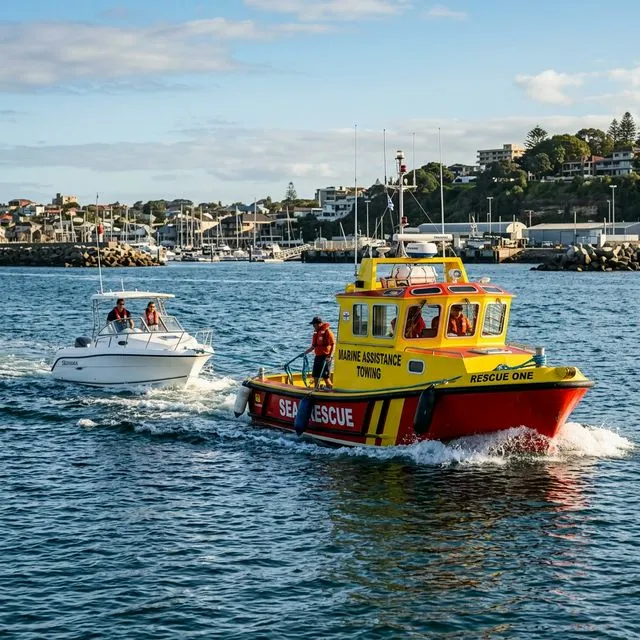
- Towing/assistance — covers on-water towing and emergency services
- Personal effects — covers fishing gear, electronics, clothing, and personal items on board
- Trailer coverage — covers damage to the boat trailer
- Hurricane haul-out or lay-up credits — available from some carriers in coastal regions
What Affects Insurance Cost?
Boat insurance premiums are commonly estimated as a small percentage of the boat's insured value, but the real quote depends heavily on vessel type, location, use, and coverage. A simple freshwater runabout and a high-performance coastal boat can price very differently even if their purchase prices are similar.
- Boat value and type — higher values, high-performance hulls, houseboats, and liveaboards may cost more
- Boat age and condition — older boats may require surveys or have limited coverage options
- Engine type and horsepower — more powerful engines increase underwriting risk
- Navigational area — inland lakes, coastal waters, Great Lakes, and hurricane zones are priced differently
- Use pattern — private pleasure use is different from charter, guide, rental, or racing use
- Experience and education — approved safety courses and clean operating history can help
- Claims history — prior marine losses can raise premiums or deductibles
- Deductible amount — higher deductibles usually lower premiums but increase out-of-pocket risk
- Lay-up period — seasonal storage periods can reduce costs in northern climates
If a quote seems unusually cheap, compare exclusions before comparing price. Some low-cost policies limit navigational territory, storm coverage, older motors, trailers, personal effects, or salvage costs.
How to Save on Boat Insurance
- Complete a boater safety course — many insurers discount approved courses, especially NASBLA-approved education
- Bundle with home or auto — multi-policy discounts are common, though marine specialists may still offer better coverage
- Install safety equipment — fire suppression, GPS, AIS, alarms, and anti-theft devices can help depending on the vessel
- Choose a higher deductible — reduces premium but increases out-of-pocket cost in a claim
- Use a lay-up period — tell the insurer when the boat is stored and not operated
- Keep maintenance records — surveys, engine service, and winterization records can make underwriting smoother
- Join a boating organization — some associations offer member programs or towing packages
- Maintain a clean claims history — fewer claims usually improves renewal options
- Pay annually — avoids monthly billing fees where applicable
- Shop multiple carriers — rates and exclusions vary significantly between companies
Do not reduce coverage just to meet a marina's minimum certificate requirement. The certificate gets you into the slip; the policy has to protect you after an accident.
Choosing an Insurance Provider
Not all insurance companies underwrite every vessel. A local runabout may fit a standard carrier, while an older cruiser, liveaboard, racing sailboat, commercial-use boat, or coastal yacht may need a marine specialist.
Common provider types
- Large personal-lines insurers — convenient if you want to bundle with home or auto
- Marine insurance specialists — useful for larger boats, coastal use, surveys, and complex coverage
- Membership programs — boating organizations may offer insurance access, towing, or member discounts
- Independent marine insurance brokers — helpful when you need multiple quotes or have an unusual vessel
What to look for
- Agreed value wording for total losses
- Navigational territory that covers all waters you actually use
- Storm plan requirements in hurricane-prone areas
- Wreck removal and salvage coverage with adequate limits
- Towing and emergency assistance suited to your boating area
- Trailer and tender coverage if you use them
- Claims reputation for marine losses, not just auto claims
Ask for the full policy form, not only the certificate of insurance. The certificate proves coverage exists; the policy form explains exclusions, deductibles, territory, lay-up rules, and claim limits.
Before You Buy a Policy
Before binding coverage, collect the same details an underwriter will ask for:
- Hull identification number, year, make, model, length, hull material, and purchase price
- Engine type, number of engines, horsepower, and fuel type
- Trailer details, if the trailer should be insured
- Where the boat is stored, launched, and operated
- Whether the boat is financed, documented with the USCG, or kept at a marina
- Boating education certificates and prior operating experience
- Any commercial, rental, guide, racing, or liveaboard use
Then compare quotes using the same liability limit, hull value, deductible, navigational territory, and towing/salvage options. That makes the comparison about real coverage instead of headline premium.
Insurance Requirement Decision Paths
Frequently Asked Questions
Is boat insurance required by law?
In most states, no. Arkansas requires liability insurance for personal watercraft and motorboats over 50 horsepower, and Utah requires liability insurance for personal watercraft and many motorboats with listed exemptions. This is not a complete 50-state law table, so verify the current state agency or code page before operating.
How much does boat insurance cost?
Cost depends on the boat's value, type, horsepower, navigational area, coverage, deductible, storage, and your experience. Compare quotes using the same hull value, liability limit, deductible, towing, and salvage options.
Does my homeowner's insurance cover my boat?
Homeowner's policies may provide limited coverage for some small boats, but the limits, horsepower restrictions, navigational territory, trailer coverage, and liability terms vary. A dedicated boat policy may provide broader marine-specific coverage; compare the policy forms or ask a licensed insurance professional.
What is agreed value vs actual cash value?
Agreed value policies generally use a stated insured amount for a covered total loss, subject to the policy terms. Actual cash value policies account for depreciation at the time of loss. Pricing and claim results vary by carrier, vessel, deductible, and exclusions.
Can I get insurance discounts for boater education?
Often, yes. Many marine insurers offer discounts for approved boater safety education, especially NASBLA-approved courses. Ask the insurer which courses qualify before you enroll.