

Boat Lien Check Direct Answer
To check for liens on a boat, start with the state title or registration record, inspect the title for listed lienholders, ask for payoff or release proof from any lender, and check USCG/NVDC records when the vessel is federally documented. A UCC search can be a useful state-specific backup, but it should not replace title or documentation clearance.
If title status is still the blocker, use the title requirements checker first. If a lien appears or the seller is paying off a loan at closing, use the boat lien release guide, registration lookup guide, and HIN inspection guide before filing a title transfer.
What Is a Boat Lien?
A lien is a legal claim against property that serves as security for a debt. Common boat lien records can involve:
- Bank or lender lien — an outstanding boat loan or security interest.
- Marina or repair claim — unpaid dockage, storage, repair, or maintenance bills.
- Tax claim — unpaid taxes that may affect ownership or transfer records.
- Preferred Ship Mortgage — a mortgage recorded with the Coast Guard for a USCG documented vessel.
Why Liens Matter to Buyers
A recorded lien can block a clean title transfer and may give the lienholder enforcement rights against the vessel, depending on the lien type and state or federal law. In practical terms:
- The agency may refuse to issue a clear title until the lien is resolved.
- The vessel may remain collateral for a debt even after a private sale.
- The buyer may need a valid lien release, payoff letter, or corrected title record before registration or resale.
- Unclear lien status can delay title transfer, financing, insurance, marina acceptance, or later resale.
How to Check for Liens
1. Check the Title
In states that require boat titles, lienholders are often shown on the title document or in the agency's title record. Look for:
- A lienholder listed on the title face.
- A lien-recorded notation or lender section.
- A signed release section, separate lien release, or lender letter if a prior loan existed.
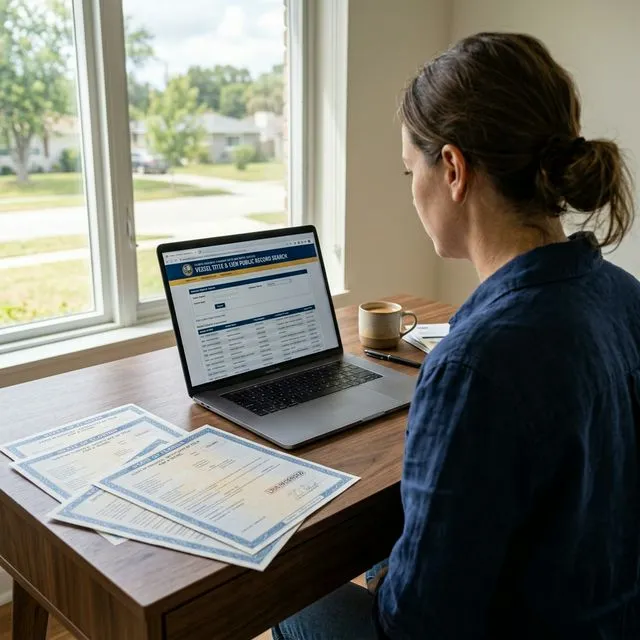
2. Contact the State Titling Agency
Contact the DMV, DNR, wildlife agency, or other state office that handles boat titles and registration. Ask what record search is available for the HIN (Hull Identification Number) and whether the agency can confirm:
- Current lienholder information on file.
- The registered or titled owner shown in the agency record.
- What release proof the agency accepts for transfer.
3. USCG Documentation Search
For federally documented vessels, use USCG/NVDC documented-vessel records and consider requesting an Abstract of Title when ownership or mortgage history matters. Documented-vessel records can show documentation status, ownership chain, and recorded Preferred Ship Mortgages or releases.
4. UCC (Uniform Commercial Code) Search
A Secretary of State UCC search may be useful when a lender filed a financing statement or when state title records are limited. Treat it as a backup check, not as a complete boat-lien clearance by itself.
5. Boat History and Theft Checks
Boat history services can supplement the record review, and NICB VINCheck can help screen for participating insurer theft or salvage records. These checks do not replace state title clearance, USCG/NVDC records, or lender release proof.
Understanding Lien Releases
A lien release (also called a lien satisfaction or release of lien) is proof from the lienholder or agency record showing that a recorded claim has been satisfied or released.
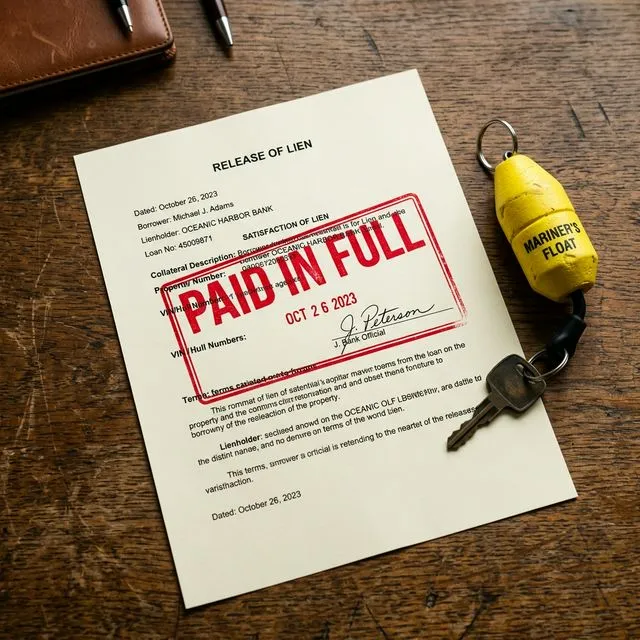
When You Need a Lien Release
- When the seller has paid off a boat loan.
- When transferring a title that still lists a prior lienholder.
- When applying for new financing or trying to prove clear title.
Common Release Proof
- From a bank or lender: a signed release section, separate lien-release form, paid-in-full letter, or agency-approved electronic release. Processing time varies.
- From a marina or repair claimant: written proof that the bill was paid and the claim is released, when that type of claim applies.
- From the state or NVDC record: an updated title, abstract, satisfaction, or release record showing the old lien is no longer active.
Protecting Yourself as a Buyer
Before the Purchase
- Run the lien check before payment — do not rely only on the seller's statement.
- Verify the HIN — confirm the number on the boat matches the title, registration, bill of sale, and any lender paperwork.
- Request clear title or release proof — in title states, the title should show no active lien or include agency-accepted release proof.
- Check theft or salvage signals — use NICB or other history tools as a supplement, not as lien clearance.
During the Purchase
- Use an escrow or lender payoff process for financed boats when the lien will be paid from sale proceeds.
- Get a detailed bill of sale that matches the HIN, seller, price, included trailer or motor, and title status.
- Consider written lien language that says how existing liens will be paid, released, or documented before transfer.
After the Purchase
- File the title or registration transfer promptly under the state's process.
- Review the new title or record to confirm no old lender remains listed.
- Keep all purchase documents including the bill of sale, release proof, title, registration, and lender payoff records.
If the main unknown is whether the state even titles this boat, use the title requirements checker before you pay.
What to Do If You Find a Lien
If your search reveals an existing lien:
- Pause the closing until you know what the lien is and who can release it.
- Determine the payoff path by contacting the lienholder or asking the seller for current payoff instructions.
- Put the payoff in the closing plan so sale proceeds go to the lienholder when required.
- Use escrow or a lender-direct payoff when the lien will be resolved at closing.
- Confirm the release proof before filing the title transfer or relying on the boat as clear title.
Frequently Asked Questions
How do I check if a boat has a lien?
Start with the state title or registration agency and the boat's HIN. For federally documented vessels, check USCG/NVDC records and consider an Abstract of Title. A UCC search or history report can supplement the review, but it should not replace title, documentation, or lien-release proof.
Does a lien transfer with the boat when sold?
A recorded lien can continue to affect the vessel and may block clear title until it is resolved. The exact legal effect depends on the lien type and the governing state or federal rules, so confirm the release path before closing.
How long does a lien stay on a boat?
A recorded lender lien usually remains in the title or documentation record until it is satisfied and released. Other claims can follow different timelines, so use the agency record and lienholder release as the practical source of truth.
Can I buy a boat with a lien on it?
Sometimes, but the closing should directly address payoff and release proof. For financed boats, use escrow, lender-direct payoff, or another documented process that produces release proof accepted by the state or NVDC.
What is a Preferred Ship Mortgage?
A Preferred Ship Mortgage is a mortgage recorded against a USCG documented vessel under federal documentation rules. If the boat is documented, check the NVDC record or Abstract of Title and require proper satisfaction or release proof before relying on clear ownership.