
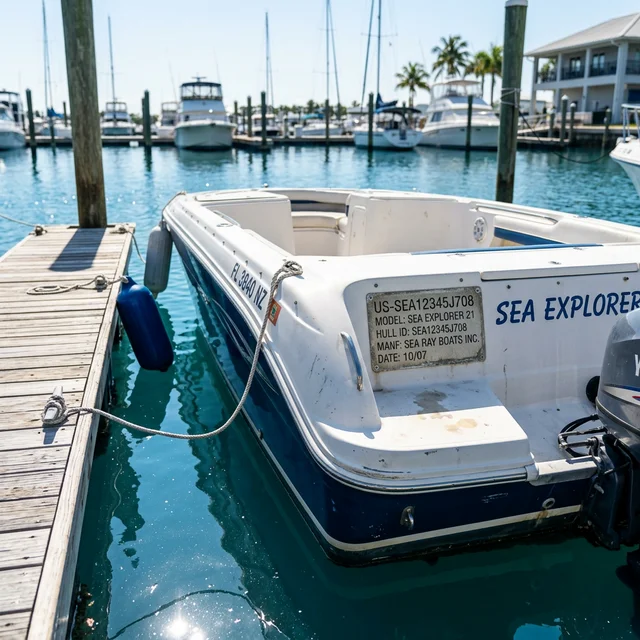
How Do You Register a Used Boat After Purchase?
Register the used boat with the state where it will be principally used or kept. Before filing, match the HIN, seller name, signed title or prior registration, bill of sale, and lien-release proof; submit the state title or registration application with tax documents and fees; then wait for the registration, decals, or state-recognized temporary authority before operating.
In a title state, the seller usually needs to resolve a missing title, recorded lien, or owner-name mismatch before final payment. If any ownership document is missing or the record does not match the seller, use the title requirements checker, the missing title guide, the bill of sale guide, the HIN inspection guide, the lien check guide, and the state guide directory before filing.
State Page vs This Guide
Use the state page when you are ready to file in a specific state and need fees, title rules, source links, and renewal timing.
Use this used-boat guide before filing when you need to organize seller documents, HIN checks, lien release proof, bill of sale, title transfer, and tax steps.
Before You Buy: Pre-Purchase Checks
Before completing a used boat purchase, run the ownership checks that prevent common title, lien, and filing problems:
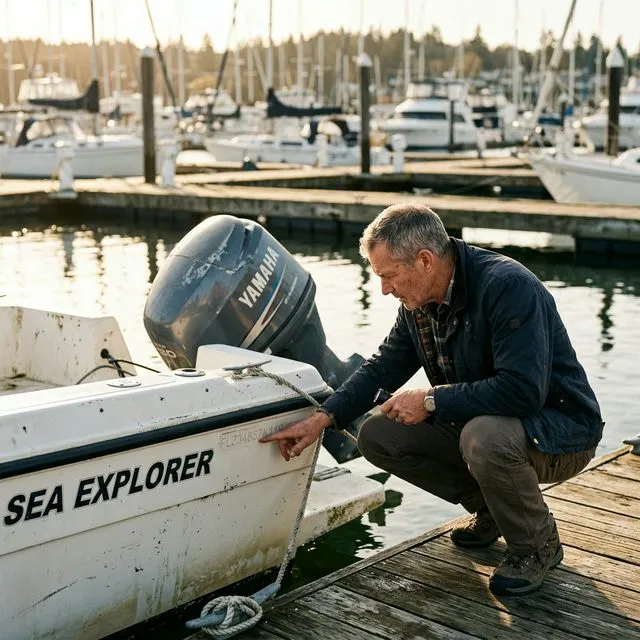
1. Verify the Hull Identification Number (HIN)
For boats covered by federal manufacturer HIN rules, the HIN is a 12-character identifier. Homebuilt, older, imported, or state-assigned-number situations may need agency review. Check that:
- The HIN on the boat matches the HIN on the title, registration, bill of sale, or documented-vessel record
- The HIN has not been altered, painted over, removed, or replaced without agency paperwork
- The format and location make sense for the boat's age and source
2. Check for Liens
A lien means a lender or other party may still appear on the ownership record. Before closing, ask for a lien-free title or agency-accepted lien release, check the state title or registration record where available, and use the boat lien check guide for state, USCG/NVDC, and UCC handoffs. If title status is still the blocker, use the title requirements checker before you pay. A private history report can be a useful clue, but it does not replace the state or documented-vessel record.
3. Verify Registration Status
Confirm that the registration, title, or documented-vessel record matches the seller or an authorized signer. An expired record is not always fatal, but a seller-name mismatch, altered HIN, or missing title in a title state should pause the transaction.
Documents You Need from the Seller
When purchasing a used boat, collect the documents your destination state accepts before you file. A bill of sale is important, but it may not replace a signed title, prior registration, lien release, tax form, or documented-vessel transfer record.
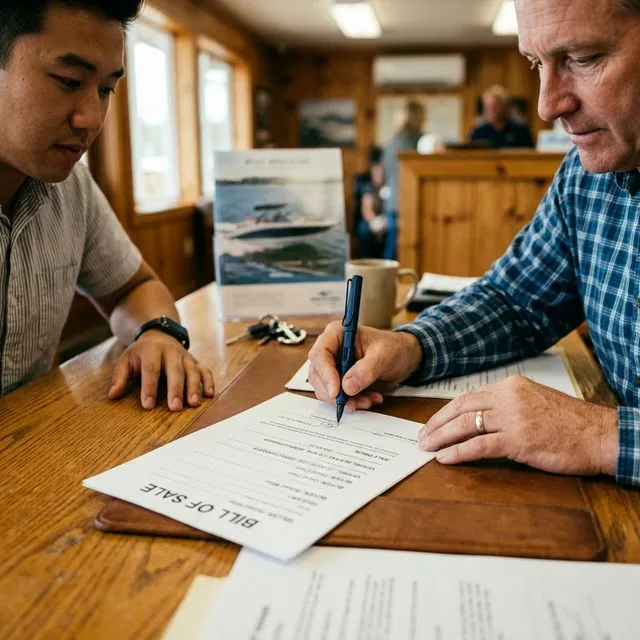
In States Requiring Titles
- Signed title - The recorded owner signs the title assignment exactly as the state requires.
- Bill of sale - Include the date, actual purchase price, vessel description, HIN, included motor or trailer items, and both parties' names and addresses.
- Current or prior registration certificate - Some states ask for the seller's registration record with the title transfer.
- Lien release - If a lender appears on the record, ask for agency-accepted release proof before closing.
In States Without Traditional Boat Titles
- Bill of sale - Often central proof, but the receiving state decides whether it is enough.
- Current or prior registration certificate - This may be the ownership record in a non-title state.
- Chain-of-ownership documents - Prior bills of sale, seller ID, or agency letters may be needed when the record is old or out of state.
Documented or Financed Boats
If the boat is federally documented, separate the state filing from USCG/NVDC ownership transfer evidence such as a CG-1340 Bill of Sale or another NVDC-accepted document. If the boat is financed, keep the payoff, lien release, and title update as separate items. Use the boat title transfer guide and lien release guide before treating the paperwork as complete.
Step-by-Step Used Boat Registration
Step 1: Confirm the Filing State
Start with the state where the boat will be principally used or kept. If the boat is moving across state lines, check both the seller's current record state and your destination state before money changes hands.
Step 2: Complete the Ownership Transfer Path
In a title state, the signed title or duplicate-title path usually has to be clear before registration. In a non-title state, prior registration, bill of sale, HIN proof, and chain-of-ownership records may matter more.
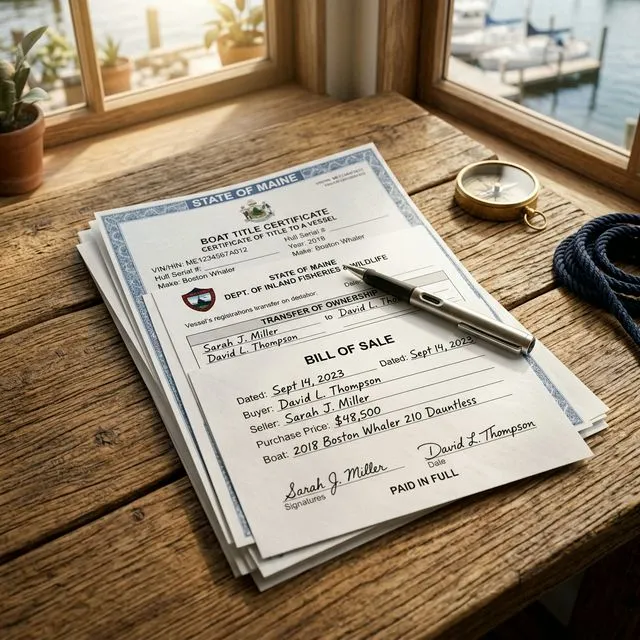
- Submit the seller-signed title or accepted ownership proof
- Complete the state title or registration application
- Pay title, registration, sales/use tax, and local or agency fees that apply to your file
Step 3: Apply for Registration
Once ownership proof is in order, apply for registration with the state agency, dealer, county office, or online system your state uses. Provide the HIN, vessel specifications, buyer information, tax documents, and payment. Use the boat sales tax guide and cost guide for context, then confirm the actual amount with the state.
Step 4: Wait for Registration or Temporary Authority
Do not assume a signed bill of sale alone lets you operate. Some states issue temporary authority or recognize an application receipt; others require registration, numbers, and decals first. See the temporary boat registration permit guide when you need to move or test the boat before the permanent record is issued.
Buying from a Dealer vs. Private Seller
| Aspect | Dealer Purchase | Private Seller |
|---|---|---|
| Paperwork | Dealer may prepare or submit title and registration paperwork | Buyer and seller usually coordinate the paperwork directly |
| Sales Tax | Dealer may collect tax or provide tax documents | Buyer usually pays tax when filing, unless the state uses another path |
| Title Transfer | Dealer may process or assist with the transfer | Buyer verifies the signed title, prior registration, or non-title proof |
| Lien Check | Review the contract, title documents, and lien-release evidence | Verify the state record, seller authority, and any lien release yourself |
| Warranty | May include limited warranty | Often sold as-is unless the contract says otherwise |
| Price | Often higher | Often lower |
For larger private purchases, consider escrow or written closing conditions so payment, title, lien release, and registration documents are exchanged in a controlled order.
Buying a Boat Out of State
Purchasing a boat from another state adds record, transport, and tax questions to the registration process:
Key Steps for Out-of-State Purchases
- Review the seller's current state record - title, registration, lien, and seller authority.
- Confirm transport authority - you may need a temporary transit permit or agency receipt before moving the boat on public water.
- Apply in your destination state - use the out-of-state documents that your state accepts.
- Handle sales or use tax - bring the bill of sale and any proof of tax already paid.
Sales Tax Credit
Some states may allow credit for tax paid in another state if you provide acceptable proof. Do not assume the credit, rate, cap, or exemption until the destination state reviews the transaction. For broader context, use the boat sales tax by state guide.
Common Mistakes to Avoid
- Not verifying the HIN - Match the HIN on the boat to the title, registration, bill of sale, and any documented-vessel record.
- Skipping the lien check - A recorded lien can delay or block title transfer and registration until release proof is accepted.
- Under-reporting the purchase price - States may question a price that does not match the transaction or market value.
- Relying on a bill of sale alone - In a title state, the bill of sale usually does not replace a title or agency-approved missing-title path.
- Operating before registration or temporary authority - Wait until the state issues registration, decals, or a recognized temporary document.
- Ignoring old numbers and decals - Follow the state display rules once your new registration is issued.
Used Boat Registration Decision Paths
Frequently Asked Questions
Do I need a title to register a used boat?
It depends on the state, vessel type, length, model year, and lien status. Some states issue no traditional boat title, while others title only certain boats. In a non-title state, prior registration, bill of sale, HIN proof, and chain-of-ownership records may be central.
How long do I have to register a boat after purchase?
The deadline is state-specific. Some states use short post-purchase windows, while others focus on whether the boat is operated on public water before registration or temporary authority is issued. Check the destination state page before operating.
How do I pay sales tax on a private boat purchase?
Many states collect sales or use tax when you title or register the boat. Bring the bill of sale with the actual purchase price and any proof of tax already paid, then let the state agency calculate the transaction-specific amount.
What if the seller lost the title?
In a title state, the recorded owner or lienholder usually needs to resolve the duplicate-title, lien-release, bonded-title, or agency ownership-review path before the buyer files. Bond amounts, waiting periods, and eligibility vary by state.
How do I check if a boat is stolen?
Start with the HIN, state title or registration record, seller ID, and local law enforcement when there is a concern. A private boat history report may help flag problems, but it does not replace agency records or a lien-release requirement.
Do I need a survey or inspection for a used boat?
A marine survey is usually separate from registration paperwork, but it can be useful for higher-value used boats, financed purchases, insurance, or condition questions. A state HIN inspection is different and may be required for missing, altered, homebuilt, or out-of-state records.