

Do You Need a Boating License or Boater Card?
Direct answer: in many states, the required operator document is a boater education card, boating safety certificate, or boating safety education ID card rather than a DMV-style license. The rule depends on the operator's age or birth date, vessel type, horsepower, residency, rental status, and whether the exact course is accepted by the state where the person will operate.
If your question is "boating license renewal," first separate two tasks: vessel registration renewal belongs to the boat record, while boater education belongs to the person operating the boat. A renewal notice for decals is not the same as an operator safety card or certificate.
NASBLA Standard
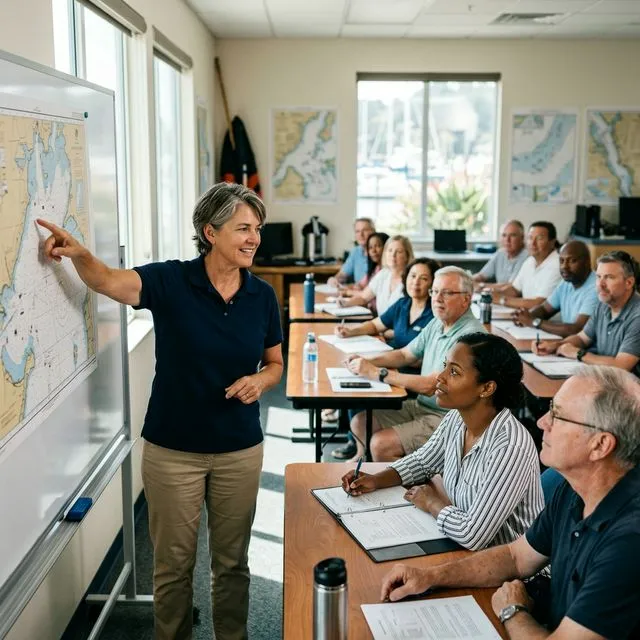
The National Association of State Boating Law Administrators (NASBLA) maintains national boating education standards that many state agencies use when approving classroom and online courses. A NASBLA-approved course is a strong starting point, but acceptance is still state-specific. Choose a course that is also listed or accepted by the state where you need the credential.
How State Rules Usually Work
States usually use one or more of these rule types:
Broad operator requirements
Some states require a safety course or boating certificate for a wide group of operators, often including adults. These rules may be tied to motorized boats, personal watercraft, birth dates, or vessel horsepower rather than every possible vessel.
Age-based or birth-date requirements
Many states require education only for operators under a certain age or born after a specific date. For example, a state may require certification for anyone born after a cutoff date, while older operators remain exempt unless another PWC, horsepower, or rental rule applies.
Personal watercraft rules
Jet skis and other personal watercraft often have stricter education and minimum-age rules than standard motorboats. If you rent or operate a PWC, check the PWC rule separately instead of relying only on the general motorboat rule.
Voluntary or limited requirements
Some states still have no broad mandatory education rule for many recreational operators, but rental companies, youth operators, local waters, or specific horsepower classes may still have requirements.
State Examples to Check First
These examples show why boater education is not one national license rule. Confirm the current agency page for the state where you will operate before paying for a course or assuming an old card still works.
- California requires operators of motorized vessels to carry a California Boater Card as of January 1, 2025.
- New York uses Brianna's Law for motorized vessel operators and boating safety education.
- Florida uses a boating safety education ID card rule for people born on or after January 1, 1988 operating a vessel powered by 10 horsepower or more, with separate PWC age limits.
- Texas requires boater education for people born after September 1, 1993 for covered motorboats, personal watercraft, and windblown vessels.
- Washington applies its boater education card rule to operators born after January 1, 1955 operating motorized vessels of 15 horsepower or more.
State guide pages should answer the local rule; this guide explains how to read the rule and avoid confusing it with vessel registration renewal.
What Do Boater Safety Courses Cover?
NASBLA-approved boater safety courses typically cover these topics:
- Navigation rules - right-of-way, buoy systems, channel markers, sound signals, and safe passing
- Boat operation - safe speed, steering, docking, anchoring, loading, and capacity limits
- Safety equipment - PFDs, fire extinguishers, visual distress signals, sound-producing devices, and lights
- Emergency procedures - man overboard, capsizing, flooding, fire, cold-water shock, and towing assistance
- Legal requirements - registration, titling, age restrictions, BUI laws, accident reporting, and local rules
- Weather - reading conditions, lightning safety, wind shifts, visibility, and storm preparedness
- Environmental responsibility - invasive species prevention, no-discharge zones, fueling, and clean boating
- Trailering - towing safety, launch-ramp etiquette, tie-downs, and retrieving
Course duration
Many online and classroom courses take about 6-8 hours, but state-approved formats vary. Some online courses allow you to pause and return later, while classroom or proctored options may require attendance at a scheduled session.
Certificate format
After passing, you may receive a paper certificate, wallet card, digital card, state-issued boater card, or boating safety education ID card. Keep the credential available when operating if your state requires proof on board or on your person.
How to Get Certified
Online courses
Online courses are often the easiest path when the provider offers a state-specific course approved by your boating agency. Before paying, confirm that the exact course is approved for the state where you need certification.
- BoatUS Foundation - offers free online safety courses for participating states
- Boat-Ed.com - offers state-specific online courses in many jurisdictions
- State agency portals - wildlife, DNR, marine police, parks, or DMV sites often list approved providers
In-person and classroom courses
Classroom options are useful if your state requires a proctored exam, if you prefer instructor support, or if you want hands-on discussion about local waters. Costs and availability vary by provider. Courses are commonly offered through:
- U.S. Coast Guard Auxiliary flotillas
- America's Boating Club / U.S. Power Squadrons chapters
- State wildlife, DNR, parks, or marine law-enforcement agencies
- Local boating organizations, marinas, and community education programs
After completing the course
- Pass the required final exam
- Save the completion certificate immediately
- Apply for any separate state card if your state requires one after course completion
- Keep proof available when operating
- Save the provider receipt in case you need a replacement card later
Do not assume a course-completion email is the same as a state-issued card. Some states require one extra application step before you are fully certified.
Cross-State Reciprocity
If you have a boater education certificate from one state, another state may accept it when the course is NASBLA-approved and meets that state's operator rule. Reciprocity is common, but it is not a promise that every state will treat every certificate the same way.
What usually transfers well
- NASBLA-approved classroom or online course certificates
- State boating safety cards based on an approved course
- Certificates that clearly show your name, completion date, and course provider
What can still vary
- Minimum operator age and supervision rules
- Personal watercraft requirements
- Rental-boat briefing requirements
- Resident versus non-resident treatment
- State-specific local-law modules
Common Exemptions
Even in states with mandatory boater education, certain groups may be exempt. Common exemptions include:
- USCG licensed operators with valid Coast Guard credentials
- Commercial operators working under a qualifying license or permit
- Military or public-safety operators when operating in an official capacity
- Operators on private waters where the state rule does not apply
- Passengers, because education requirements usually apply to the person operating the vessel
- Young operators under direct supervision by a qualified adult, where state law allows it
- Short-term renters who complete a rental-agency safety briefing in states that allow temporary rental certificates
Read exemptions narrowly. If you are operating a friend's boat, renting a PWC, crossing into another state, or moving from inland water to coastal water, confirm that the exemption still applies.
Before You Operate Checklist
Use this short checklist before operating in a new state or after buying a boat:
- Confirm the operator rule for your age, birth date, residency, and vessel type.
- Verify course approval on the state agency's approved-provider list.
- Save proof as a printed card, phone screenshot, and cloud copy.
- Check PWC rules separately if you will operate a jet ski or similar craft.
- Ask your insurer whether the course qualifies for a discount.
- Review local restrictions such as no-wake zones, night-operation limits, alcohol rules, and required safety equipment.
Education is only one part of legal operation. You still need the right registration, title documents, capacity compliance, required safety gear, and sober-operation practices.
Boater Card Renewal vs Boat Registration Renewal
Many boater education credentials do not need periodic renewal, but replacement-card, temporary-renter certificate, provider account, and state-card rules vary. If the state says the credential is permanent, you may still need to replace a lost card or update a state account.
Boat registration renewal is different. That renews the vessel record, decals, or registration certificate and belongs on the state registration page or the boat registration renewal guide. If a search result or renewal notice uses the word "license," confirm whether it means the operator credential or the boat's registration record before filing.
Before You Operate Checklist
Use this short checklist before operating in a new state or after buying a boat:
- Confirm the operator rule for your age, birth date, residency, and vessel type.
- Verify course approval on the state agency's approved-provider list.
- Save proof as a printed card, phone screenshot, and cloud copy.
- Check PWC rules separately if you will operate a jet ski or similar craft.
- Confirm registration separately before assuming an operator card lets an unregistered boat operate.
- Review local restrictions such as no-wake zones, night-operation limits, alcohol rules, and required safety equipment.
Education is only one part of legal operation. You still need the right registration, title documents, capacity compliance, required safety gear, and sober-operation practices.
Frequently Asked Questions
Is boater education required in my state?
It depends on the state and operator. Many states use age, birth-date, vessel-type, horsepower, PWC, rental, or residency rules rather than one all-operator rule.
How much does a boater safety course cost?
Costs vary by state and provider. Free and paid approved options may be available, and some states charge separately for a state card or replacement card.
Is my boater education card valid in all states?
Not automatically. A NASBLA-approved course often helps with reciprocity, but the visiting state may still have its own age, PWC, resident, renter, or local-law requirement.
Do I need to renew my boater education certificate?
Many boater education credentials do not expire, but renewal, replacement, temporary certificate, and state-card rules are state-specific. Check the issuing agency before assuming the card is permanent.
Can I take the course online?
Often yes, but verify the exact online provider on the state agency's approved-provider list before paying. Some states or circumstances may require a proctored, classroom, or state-card step.
Is boating license renewal the same as boat registration renewal?
No. Boat registration renewal updates the vessel record, decals, or certificate. Boater education or boating license wording usually refers to the operator's card, certificate, or safety education record.